The Problem
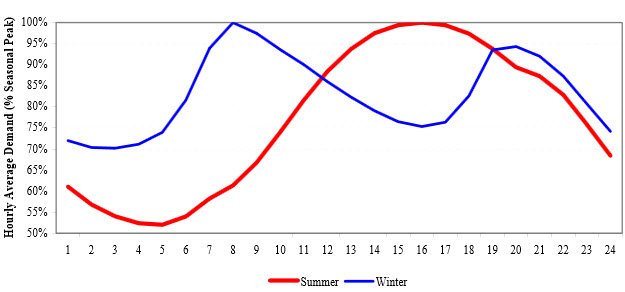
Present-day electric grid infrastructure faces a challenge of managing the supply and delivery of power to fluctuating demands. This balancing job is challenging, requiring the start and stop of power plants to match the consumers’ needs. Moreover, the challenge became even more difficult with the rise of renewables such as solar which generates power based on the weather conditions, injecting even more unpredictability into the system. SkyScan’s purpose is to gather data in the solar panel farms to more accurately forecast power generation, allowing for more efficient power grid management.
The primary target market for SkyScan includes solar business owners who operate in the U.S. solar energy market, which has a total addressable market (TAM) of $160.3 billion. Within this, the serviceable addressable market (SAM) is estimated at $32.06 billion, targeting the 11,000 solar business owners who would benefit from optimized solar panel efficiency. The serviceable obtainable market (SOM) is calculated as $77.5 million, reflecting a 22% capture of the SAM. These business owners are motivated to reduce costs and maximize renewable energy output, making SkyScan's real-time optimization an attractive solution. Secondary markets include residential solar users and community-based renewable energy projects, particularly in regions with consistent sunlight.
The Market
The Solution
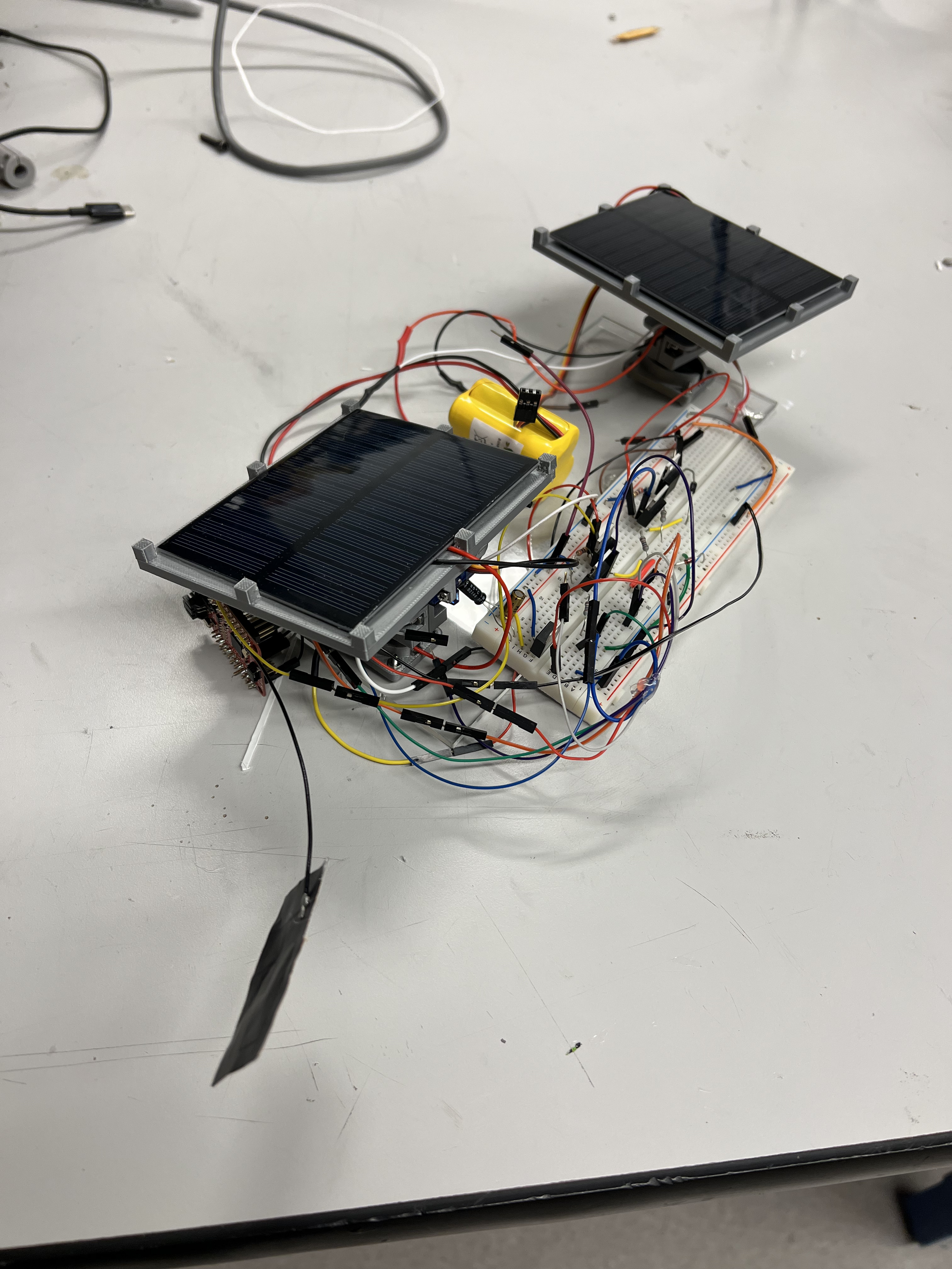
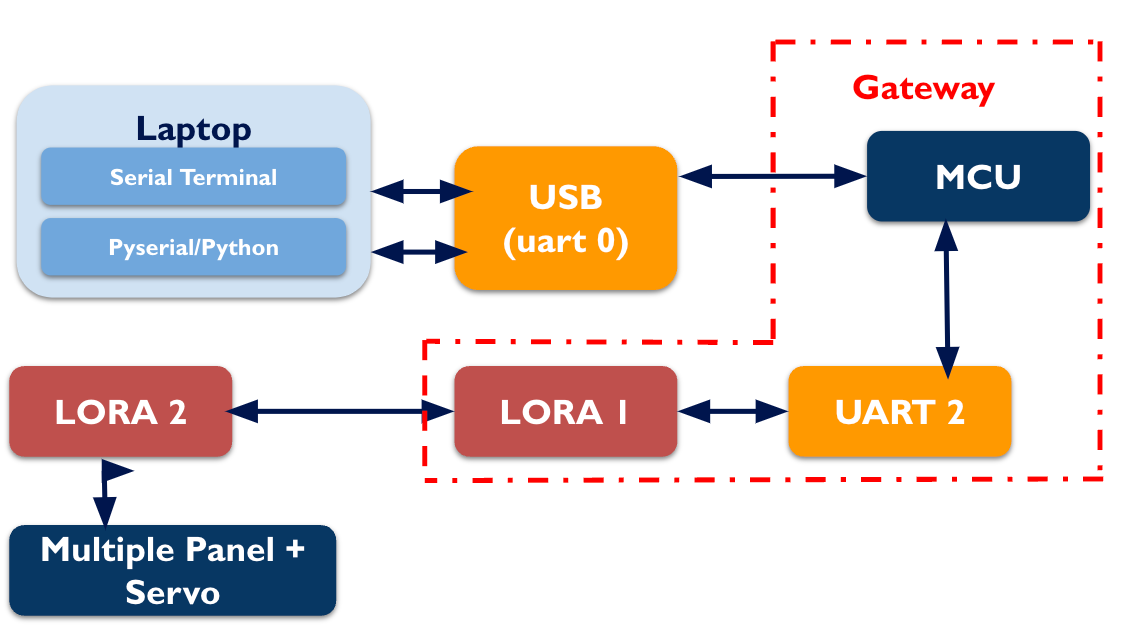
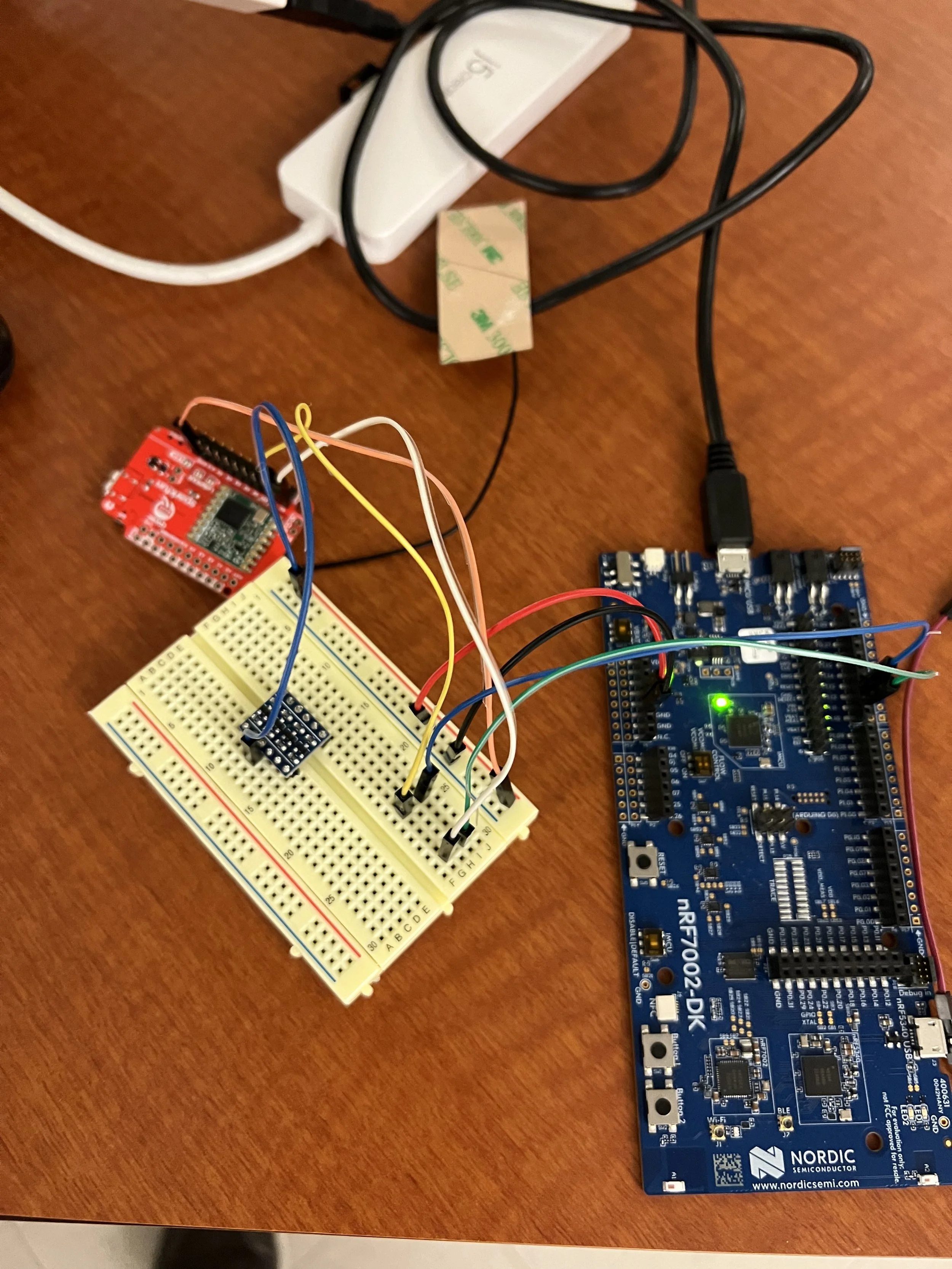
SkyScan is a solar optimization system designed to maximize energy capture through dynamic panel adjustments and send back accurate data on the position/sun exposure. The core of the system is a centralized microcontroller unit (MCU), which acts as the gateway for processing data and managing commands. The system starts with solar irradiance sensors that collect real-time sunlight data, which is transmitted via LoRa wireless communication modules. The LoRa 1 module relays this data to the MCU through a UART 2 channel, enabling the processing of sensor inputs.
Once processed, the MCU calculates the optimal panel tilt and sends commands back to the LoRa 2 module, which communicates with servo motors attached to multiple solar panels. These servos adjust the panel angles in real-time to maximize exposure to the sun. Data from the MCU can also be accessed via a USB (UART 0) connection to a laptop, allowing for monitoring and troubleshooting using tools like a serial terminal or Python scripts (via PySerial). The product's ecosystem ensures seamless interaction between its components. The multiple panel and servo array enables scalability, while the secure and energy-efficient LoRa protocol ensures reliable long-range communication. With real-time control and monitoring capabilities, SkyScan offers users an integrated solution for optimizing solar energy generation. A quick change was that we weren’t able to use the UART 1 likely due to cross overs on the board (met with Miles to learn more about this).
The system starts with integrated sensors that monitor sunlight intensity, panel temperature, and environmental factors to collect real-time data. This data is transmitted via LoRa wireless modules to a central microcontroller unit (MCU), which processes the inputs and issues commands to servo motors. These motors reposition the solar panels to achieve optimal tilt based on the sun's current position. Additionally, the system incorporates a secure online web interface, enabling users to monitor solar performance metrics, analyze historical data, and make adjustments as needed. SkyScan's seamless integration of hardware and software components ensures that users can maintain peak solar efficiency without manual intervention.
Hardware Requirements:
Servos: Dynamically adjust solar panel tilt for optimal sun exposure.
Microcontrollers (MCUs): nrf7002 DK and sparkfun lora. Act as the gateway, processing data from sensors and transmitting commands.
Sensors: Solar panels monitor sunlight intensity and each given angle and send back this information. Later features of this may include sensing of panel temperature and other environmental factors.
Solar Panels
Software Requirements:
Memfault
Web Scraping: Utilizes tools to extract sun exposure angles from public sources like Google’s Sunroof API. Deployed costs are $5 per user per month.
Amazon EC2: Server infrastructure for web scraping and data analysis.
Amazon S3: Data storage for real-time and historical sun exposure data.